Executive Summary
OverviewDarkMatter Market operates as a prominent hidden service platform residing entirely within decentralized, encrypted networks. Designed to facilitate private commerce, the infrastructure enforces stringent operational security measures aimed at preserving the anonymity of all network participants.
Initially established in late 2022, the platform quickly gained traction among privacy advocates and cryptographic analysts due to its robust technological underpinnings. The primary focus of DarkMatter Market encompasses digital goods, specialized software architectures, informational commodities, and privacy-preservation services. It differentiates itself through a highly restrictive, code-audited ecosystem that aggressively mitigates external network surveillance.
Historical Timeline
ChronologyGenesis Deployment
Q4 2022Initial launch of the core infrastructure. The platform debuted with basic multi-signature capabilities and standard PGP integration for account creation and secure communications.
Infrastructure Overhaul
Q2 2023Implementation of advanced DDoS mitigation routing. The network topology was fragmented into specialized load-balancing microscopic nodes to ensure 99% uptime against kinetic network stress.
Monero Exclusivity
Q1 2024Deprecation of legacy transparent ledgers. DarkMatter Market transitioned to a strictly Monero (XMR) framework, enforcing ring signatures and stealth addresses across all internal economies.
Technical Architecture
SysAdminCryptographic Authentication Integration
Unlike traditional platforms housing internal credentials, DarkMatter Market enforces mandatory dual-factor authentication routed strictly through established GnuPG public keys. Passwords serve merely as a localized salt; genuine access demands the physical decryption of dynamic, timed cryptographic challenges generated by the server.
Multisignature Escrow
Funds are never directly held by the primary architecture. Transactions utilize a 2-of-3 multisignature structure. This ensures neither the platform administrators, the merchants, nor the consumers maintain unilateral control over financial assets during transit.
Walletless Modality
DarkMatter operates on a strictly walletless framework. Participants do not deposit funds into centralized exchange wallets. Instead, invoices are generated dynamically, and payments are broadcasted directly from external self-custody nodes.
Platform Interface Preview
Visual Cache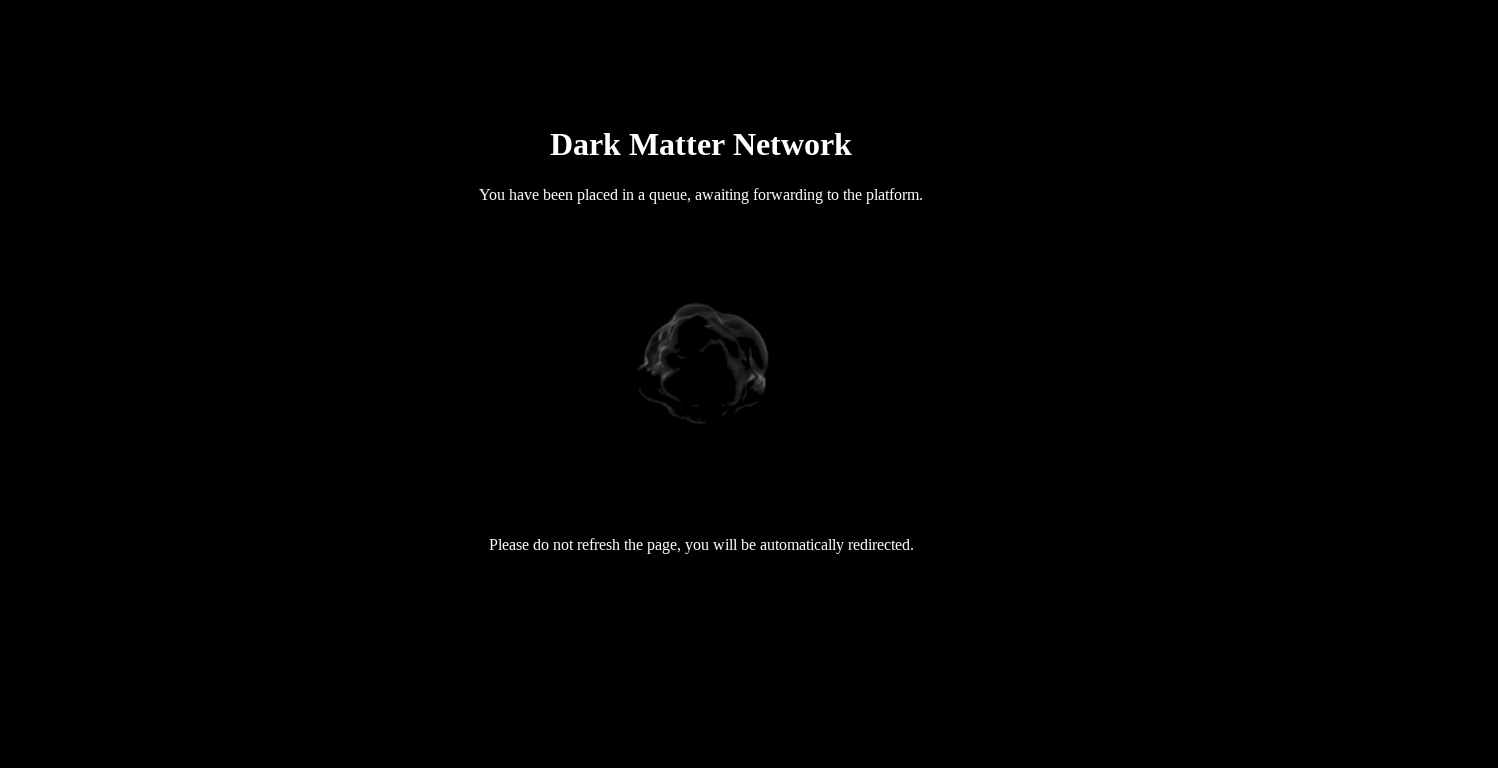
Fig 1. DDoS Protection Screen
Initial kinetic-filtering layer requiring cryptographic proof-of-work.
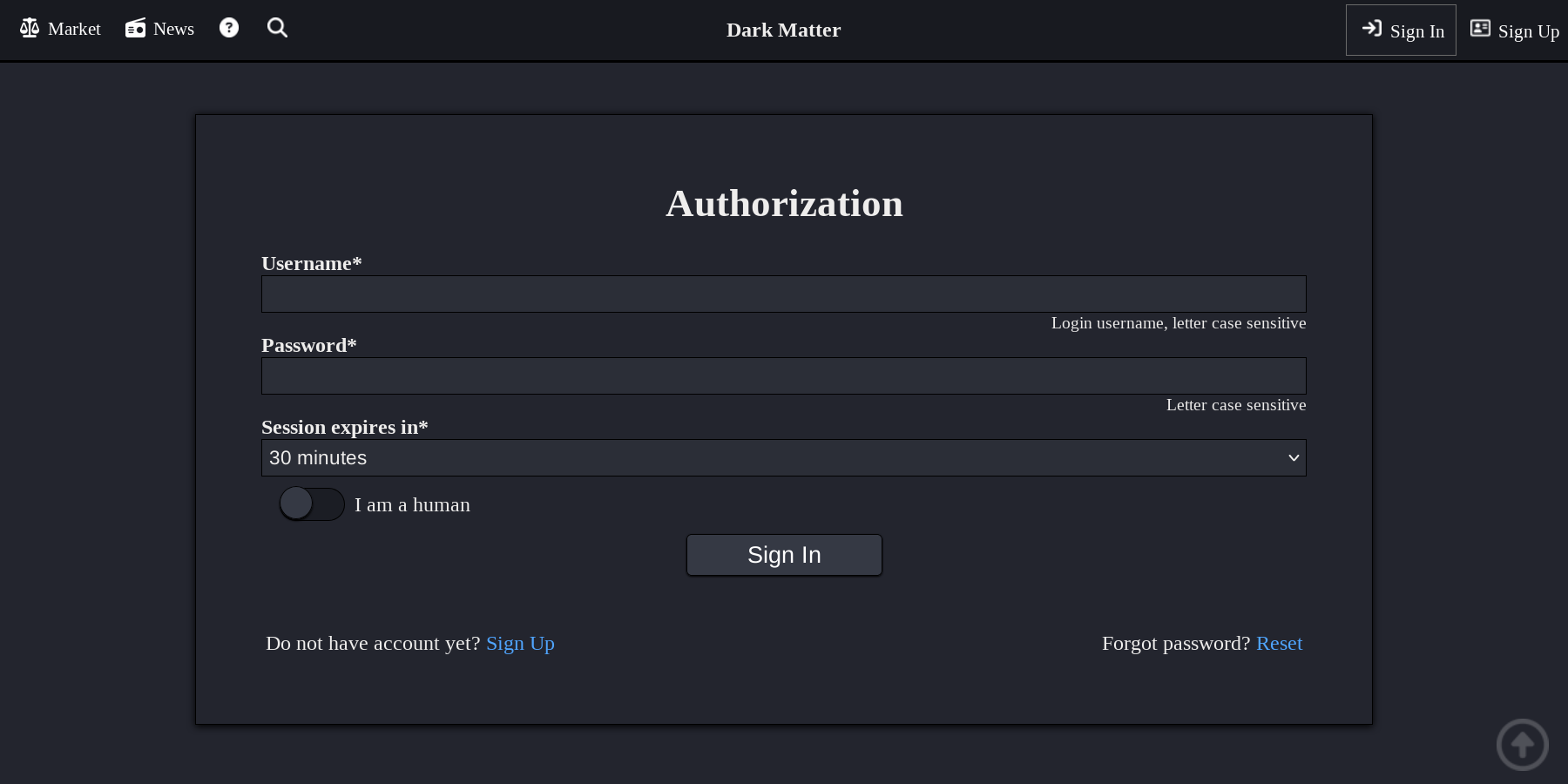
Fig 2. User Login Interface
Encrypted terminal requiring strict 2FA PGP decryption strings.
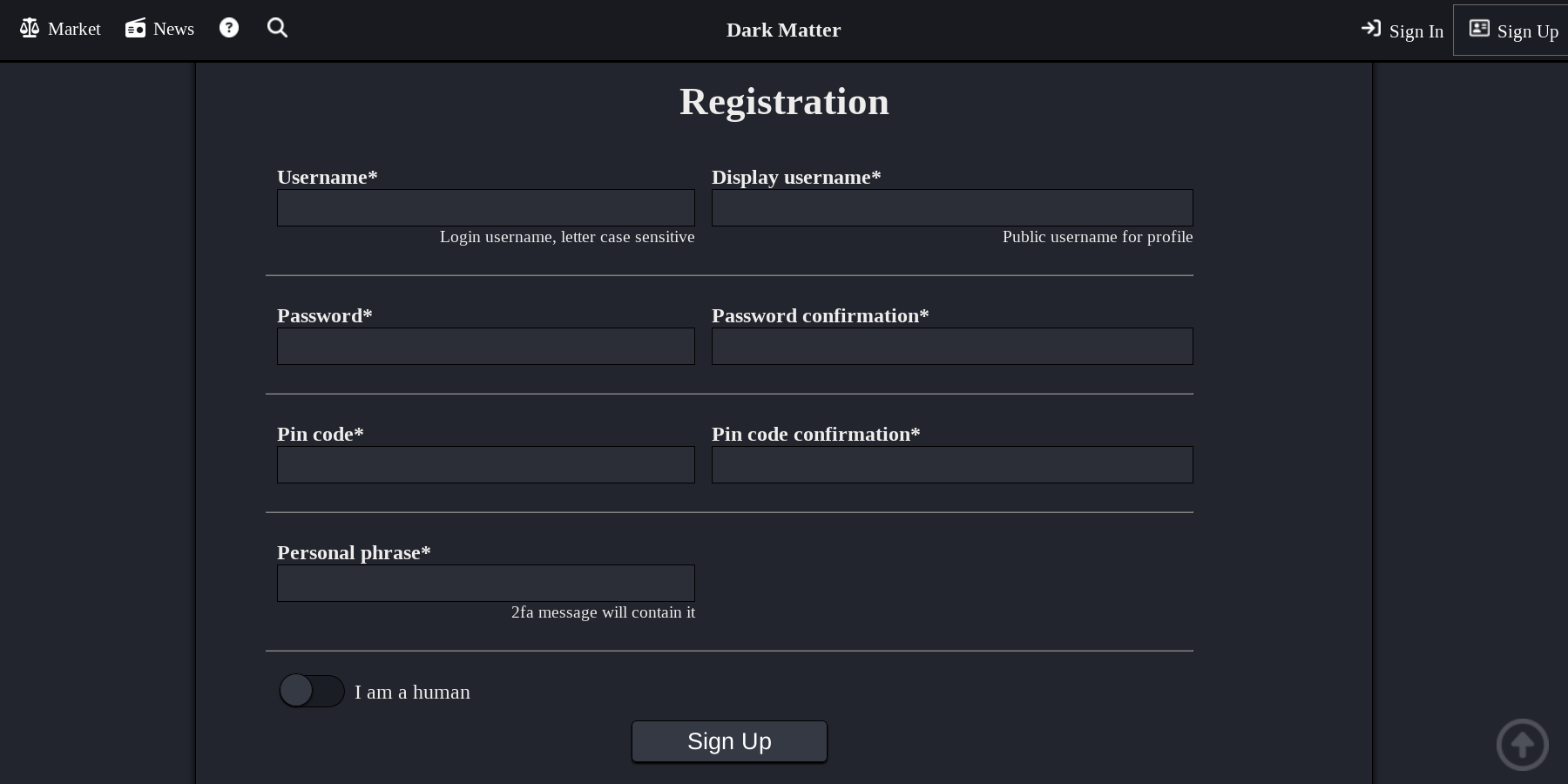
Fig 3. Account Registration Page
Generation protocol for establishing a secure identity mnemonic.
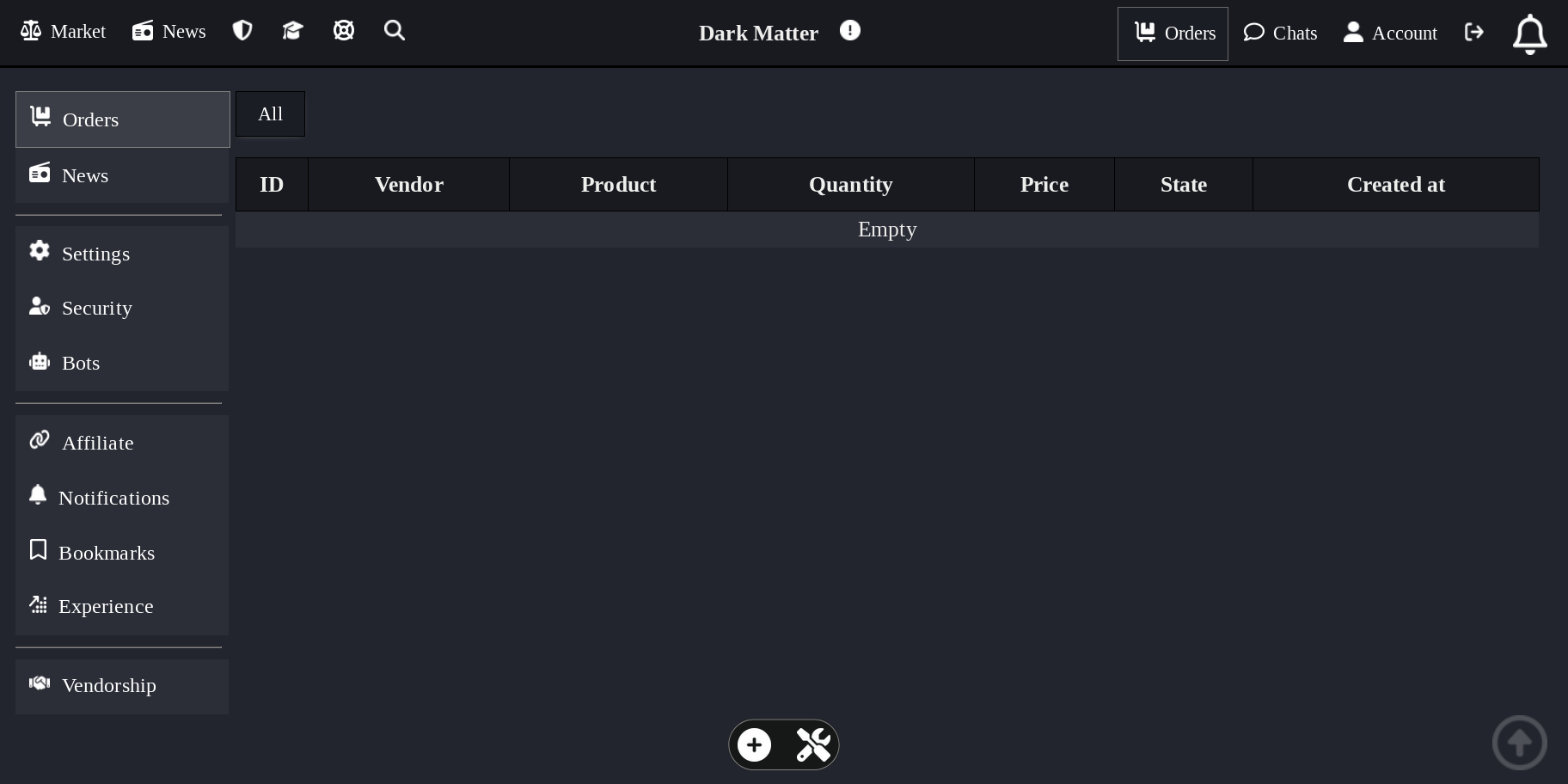
Fig 4. Main Market Dashboard
Decentralized layout organizing available digital commodities.
Community & Statistics
Active Network Nodes
~145,000
Estimated authenticated consumer participants analyzing traffic density.
Merchant Verification
Strict Enforcement
Accounts establishing commercial entities must provide rigid cryptographic proofs, historical network signatures, and substantial financial bonds to deter malicious distribution.
Observer Reputation
Currently recognized by researchers as possessing highly resilient architecture, mitigating frequent desynchronization attacks observed on parallel networks.
Archival Node Reference
Verified point of reference corresponding to historical analysis records.